 English
 Français
 Deutsch
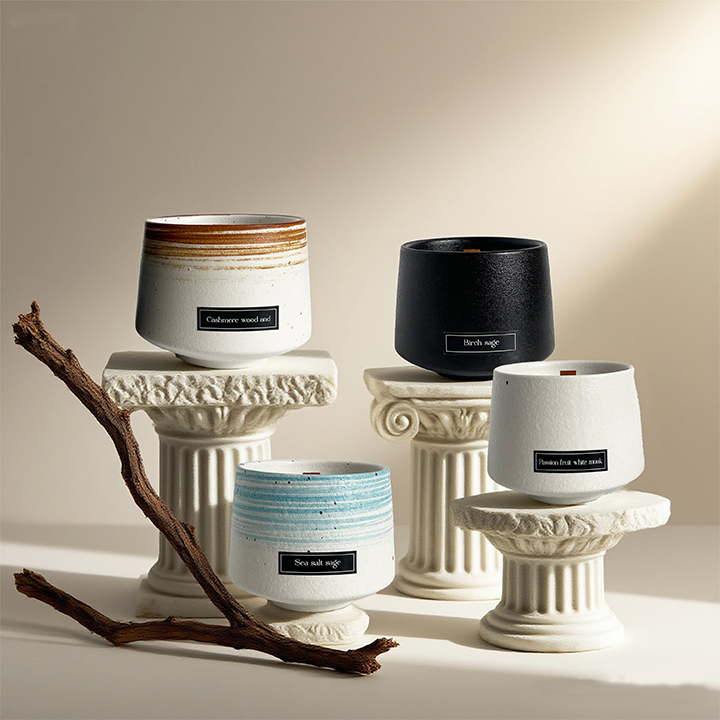
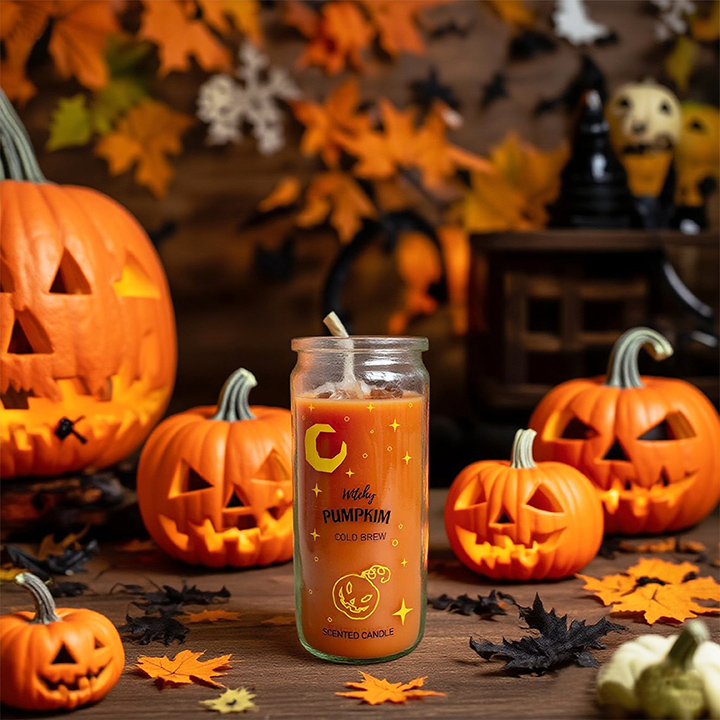
Soy Wax Candle Manufacturers in China
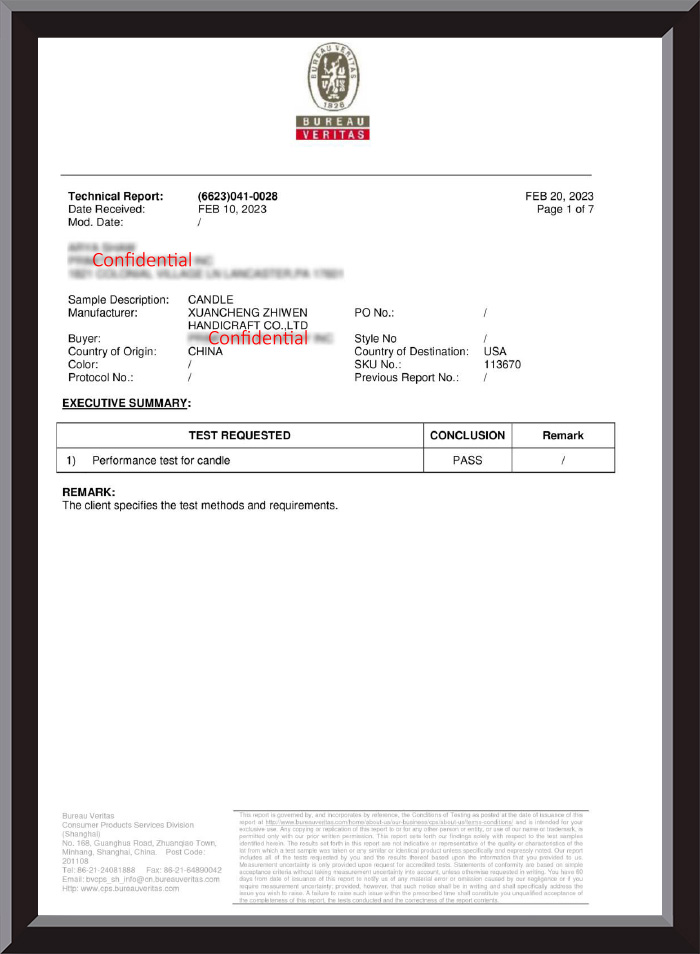
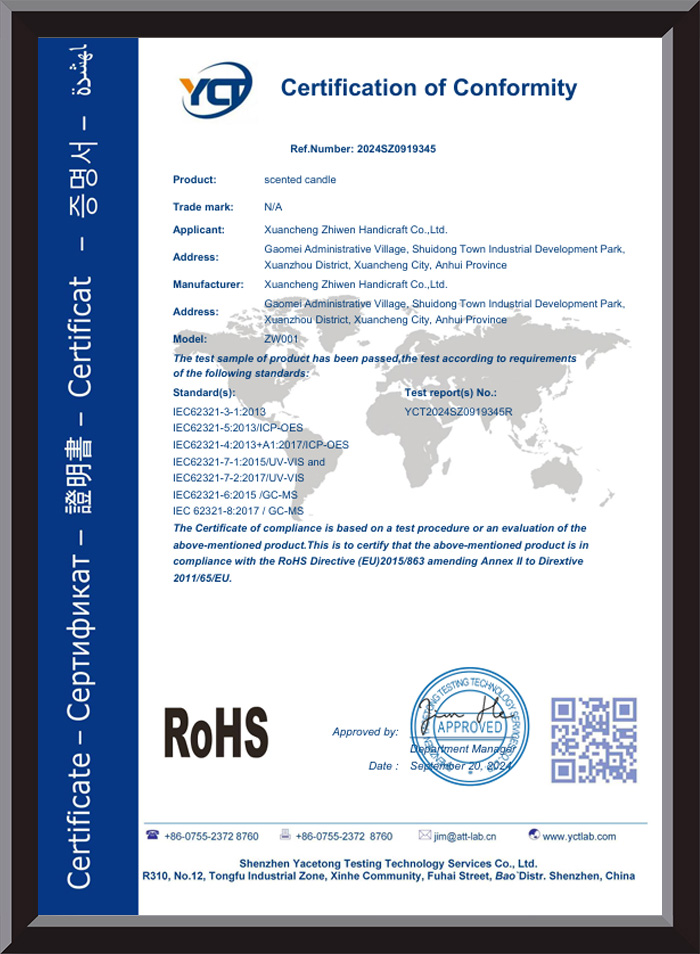
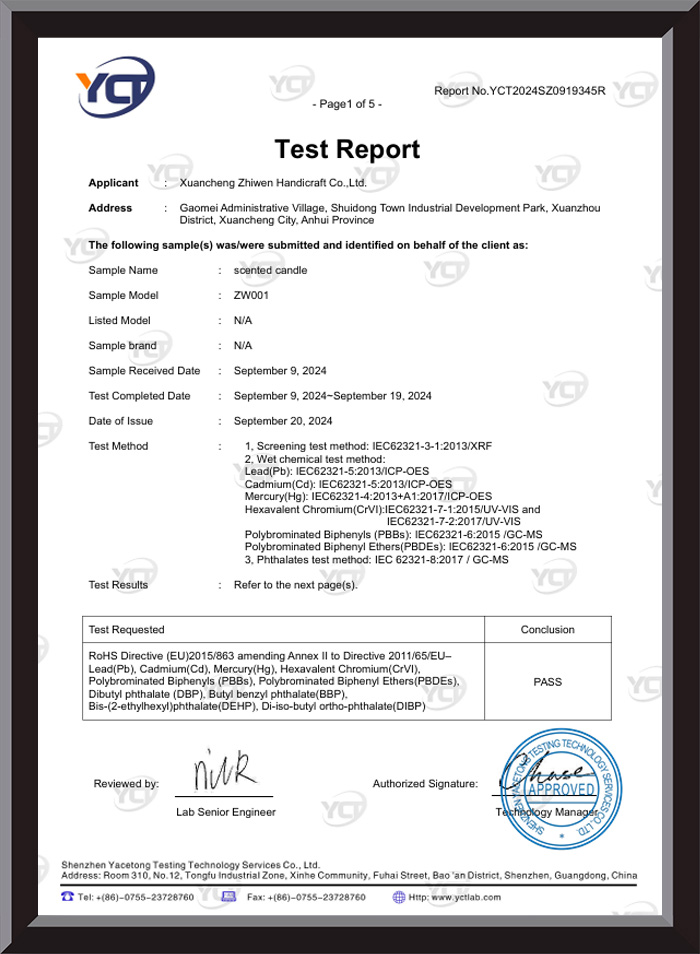
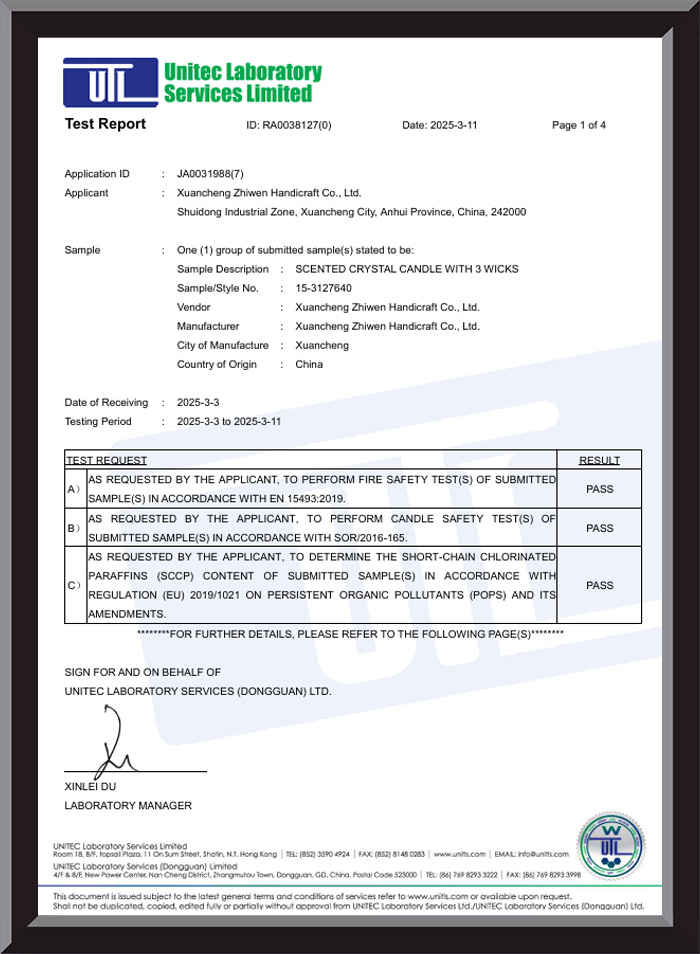
Xuancheng Zhiwen Handicraft Co., Ltd. is a high-tech enterprise specializing in the production of scented candles. Soy Wax Candle Manufacturers and Luxury Soy Candles Company in China.
Founded on April 21, 2004, the company has more than 20 years of in-depth experience in the scented candle industry and holds 11 patents for scented candle production equipment.
Zhiwen Handicraft has a professional R&D and sales team, mainly providing labeling and processing services for scented candles for overseas markets. Wholesale Soy Wax Candle. Bulk Luxury Soy Candles. The company serves customers in more than 30 countries and regions. With the principles of quality as its foundation and integrity as its core, Zhiwen Handicraft strives to create high value for its customers.
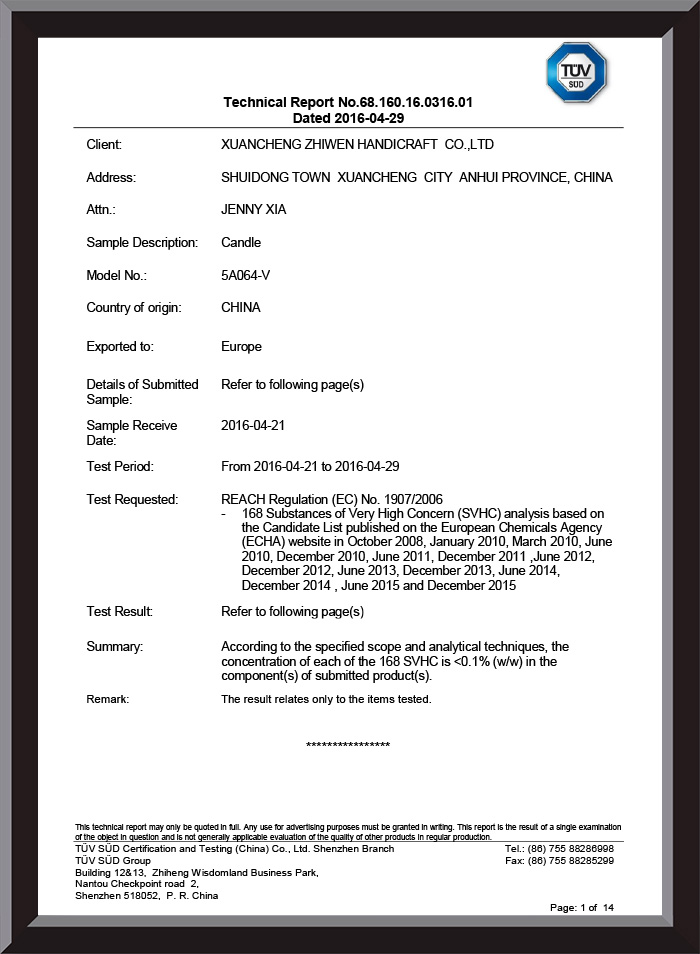
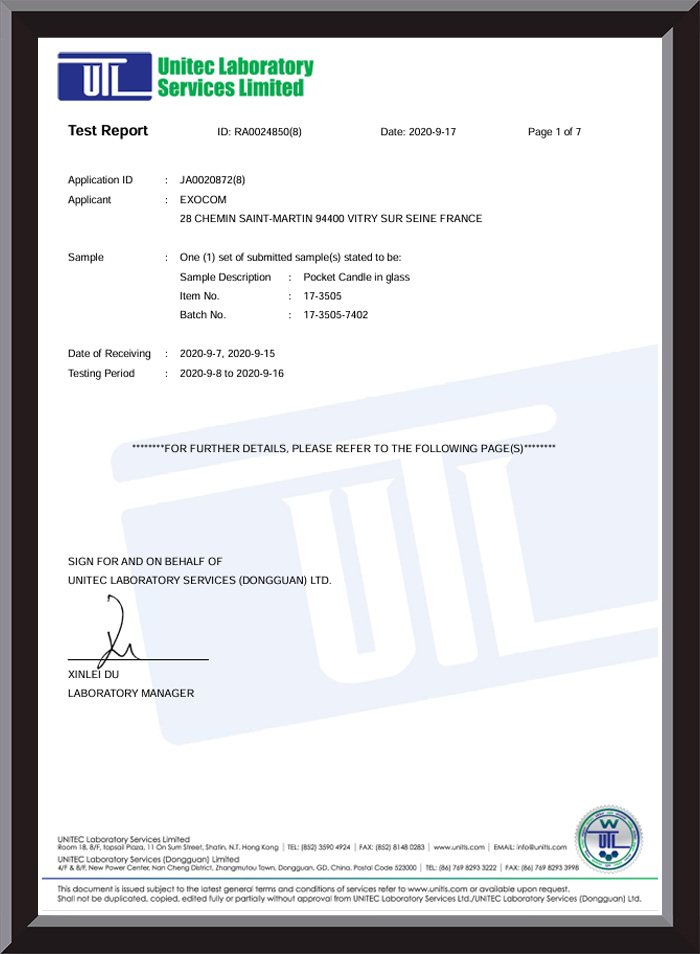
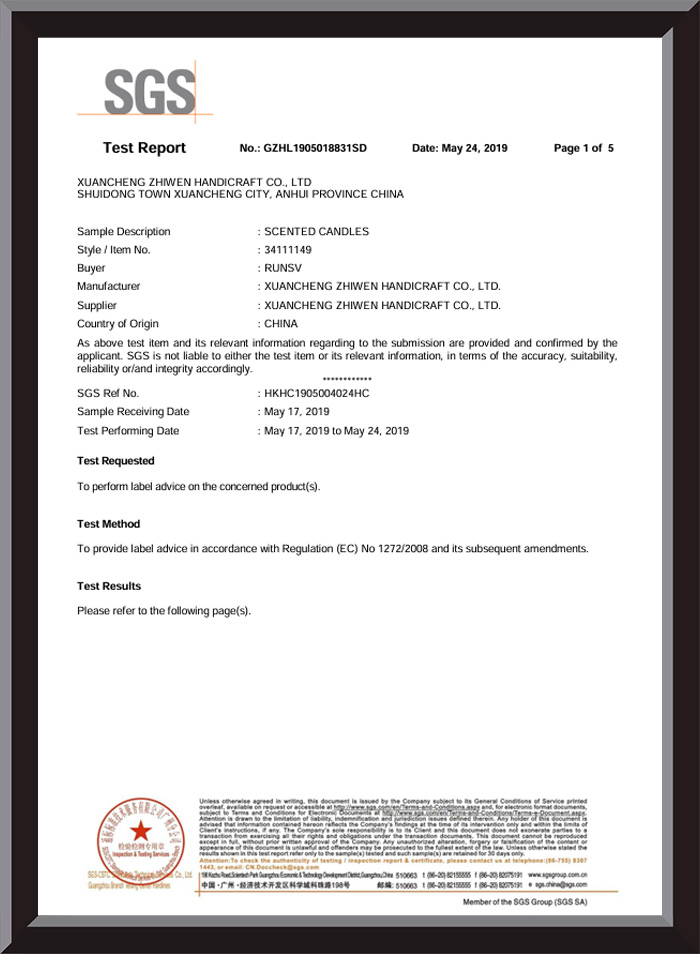
How Wax Formulation Influences Burn Quality and Fragrance Performance
The performance of a Soy Wax Candle depends on more than the percentage of soy wax shown in a product specification. Buyers should also evaluate wax hardness, melting point, fragrance compatibility, cooling behavior, and resistance to temperature changes during transportation. These factors influence whether the candle burns evenly, releases fragrance consistently, and maintains a smooth surface after production.
Matching the wax to the container and market
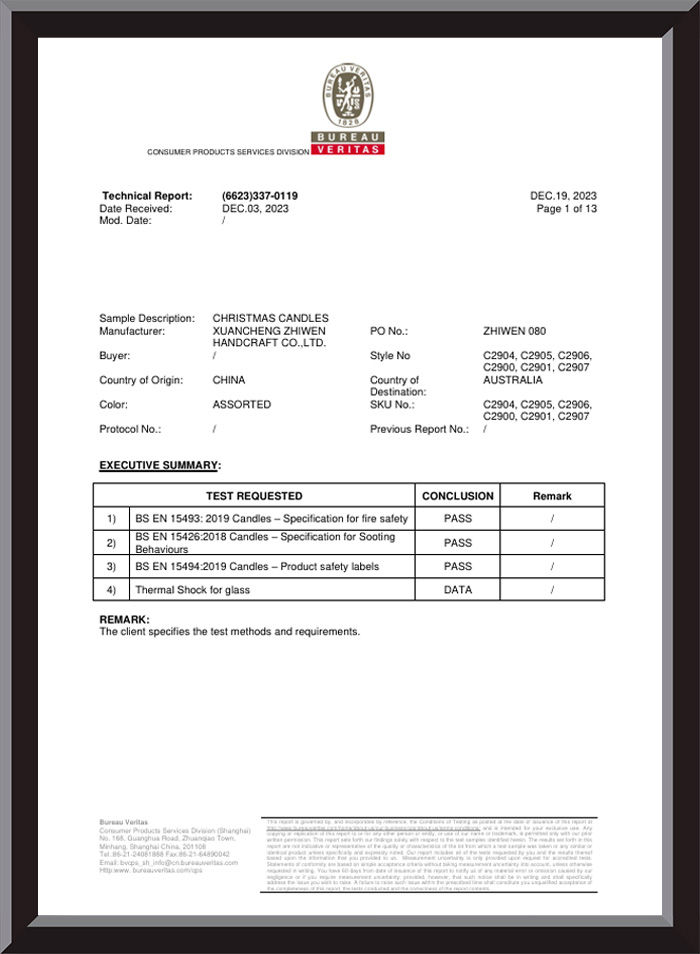
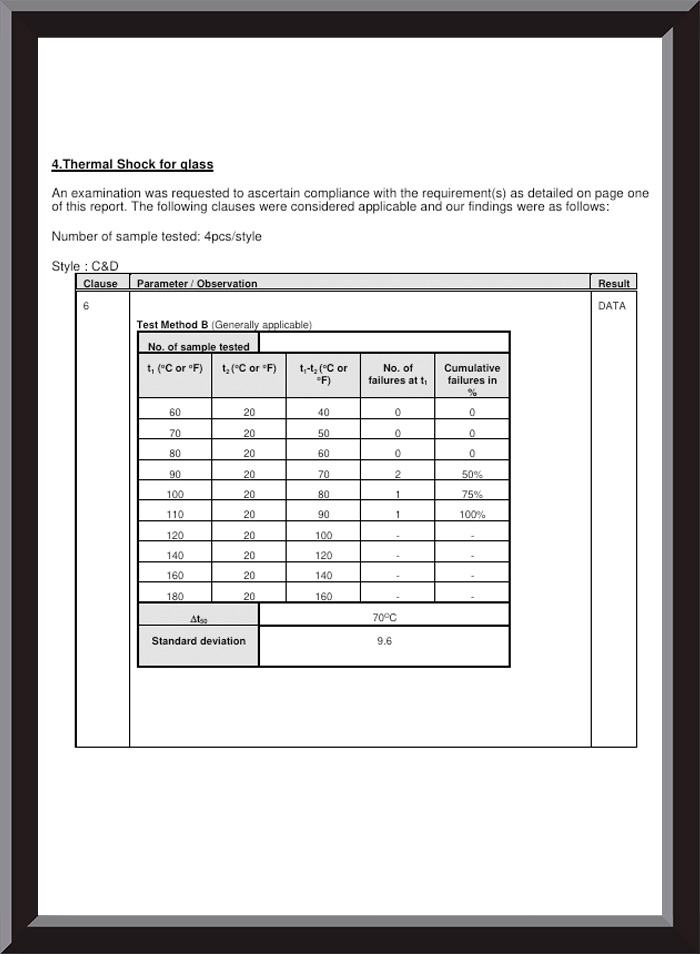
A softer soy wax blend may provide strong cold scent and good container adhesion, but it can become vulnerable during summer shipping. A harder formulation may offer better heat resistance, yet require additional testing to prevent tunneling or weak hot throw. Buyers should therefore provide suppliers with the expected selling region, storage temperature, container diameter, fragrance load, and target burn time before confirming a formula.
| Factor | Buyer Concern | Recommended Check |
|---|---|---|
| Melting point | Heat resistance in storage and transit | Confirm testing under expected seasonal temperatures |
| Fragrance load | Scent strength and combustion stability | Request burn tests at the proposed percentage |
| Cooling profile | Surface finish, frosting, and adhesion | Inspect samples after temperature cycling |
At Zhiwen Handicraft, we use our production experience to help buyers balance appearance, scent performance, and transport stability instead of relying on a single wax parameter.
Why Wick Selection Must Be Tested as a Complete Candle System
Wick size cannot be selected accurately from container diameter alone. Fragrance composition, dye concentration, wax viscosity, vessel shape, and fragrance load all affect the amount of fuel reaching the flame. Even two candles with identical jars may require different wick specifications when their fragrances contain different levels of heavy aromatic materials.
Useful burn-test observations for buyers
- Measure the melt-pool diameter and depth at regular intervals.
- Check whether the flame remains stable without excessive flickering.
- Record mushrooming, soot deposits, container temperature, and wick lean.
- Continue testing through the final third of the candle, where heat accumulation is greater.
A successful wick produces a controlled flame, an appropriate melt pool, and acceptable container temperatures throughout the candle’s life. A sample that performs well during the first two hours is not sufficient evidence of complete burn safety. Buyers should request test records for the full intended burn cycle and confirm that the tested sample matches the final fragrance, vessel, wick, wax, and fill weight.
For Luxury Soy Candles, wick performance also affects perceived quality. Uneven wax consumption, dark residue, or an unstable flame can quickly reduce the premium impression created by the vessel and packaging. We therefore recommend approving the candle system only after repeated tests from multiple production samples.
Quality Control Points That Matter in Private-Label Candle Production
Private-label buyers often focus on fragrance and packaging approval, but production consistency is equally important. Small variations in pouring temperature, wick placement, fragrance mixing, curing time, or label application can create noticeable differences between batches. A practical quality plan should define measurable tolerances before mass production begins.
Specifications worth documenting
- Net wax weight and permitted filling tolerance.
- Maximum wick-centering deviation.
- Approved fragrance, wax, wick, vessel, lid, and packaging references.
- Acceptable limits for frosting, wet spots, surface marks, and discoloration.
- Label position, orientation, adhesion, and barcode readability.
- Carton strength, internal protection, and drop-test requirements.
Buyers should retain an approved reference sample, commonly called a golden sample, for comparison during production and final inspection. Packaging components should also be tested with the finished candle because fragrance oils may interact with coatings, adhesives, printed surfaces, or lid materials over time.
With more than 20 years of scented-candle production experience and patented equipment expertise, Zhiwen supports detailed sampling, labeling, processing, and quality-control requirements for international projects. Our objective is to make specifications easier to reproduce across repeat orders while protecting the intended appearance and performance of each private-label collection.
Get in touch: [email protected]
Copyright © Xuancheng Zhiwen Handicraft Co., Ltd.
